Ad by early code
Learn Python Programming Today!
Kickstart your journey in tech and data science with high-demand skills taught by industry experts at Early Code Institute.
Why Python Is the First Programming Language for Beginners in Data & Tech
Henry Godstime - Published July 18, 2026
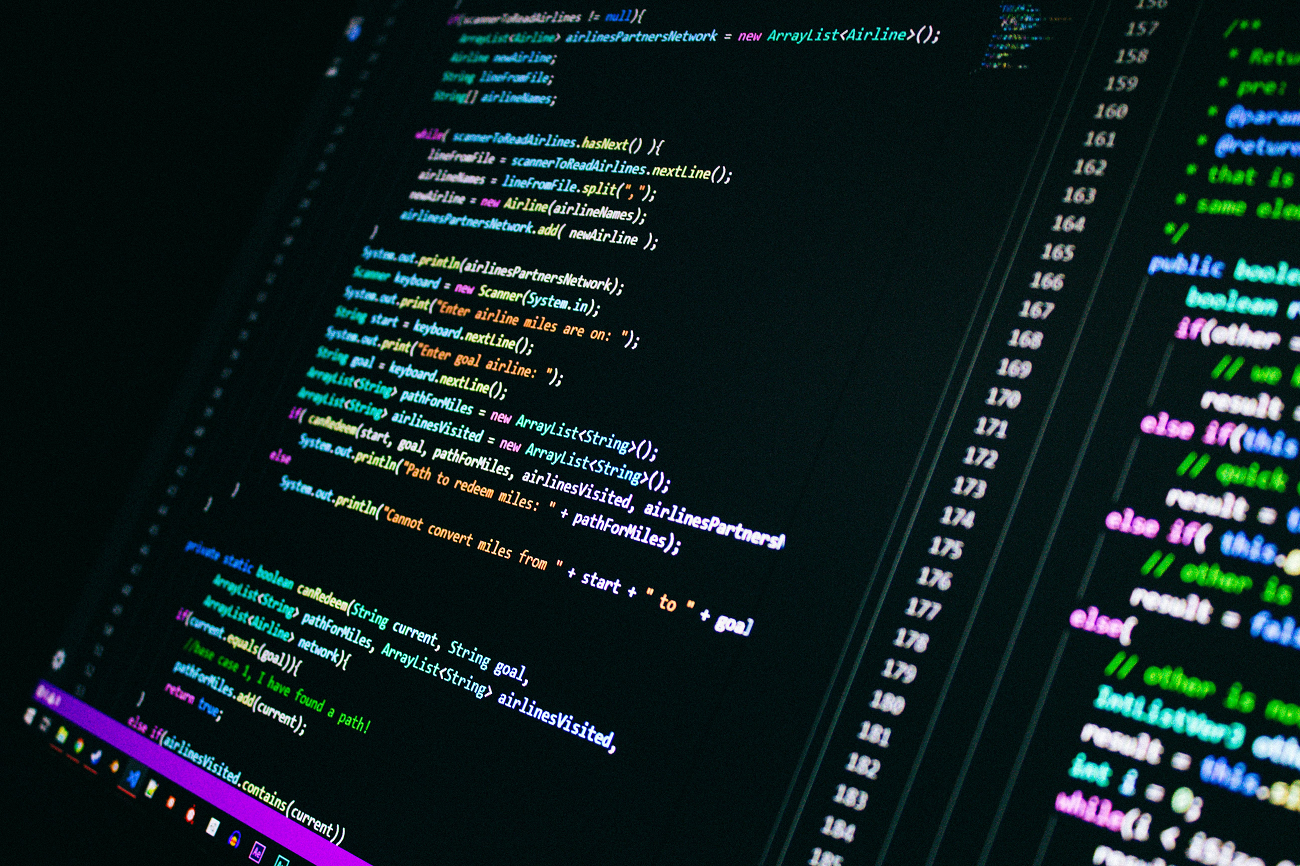
Choosing your first programming language can feel overwhelming. Many beginners get stuck trying to learn complex code syntax before they even understand the basics of logic, leading to frustration and burnout.
As a beginner who desires to break into data science, I would say learning Python Programming should be your first option, because it is the easiest Programming Language to start your tech career with. Python Programming Language, is close to the English Language, according to Guido van Rossum, the Inventor of Python..
Here is a fact: after struggling to grasp other programming languages as a beginner, I decided to learn Python. Its simple and readable syntax helped me understand core programming concepts, making the languages that once seemed difficult much easier to learn and work with.
In this article, I will be telling you why the Python programming language is the best first language to learn as a beginner, not to sell you a dream, but to help you see how approachable coding can actually be when you start with the right tool.
Readability of Python Syntax
Over the years, one thing beginners tend to struggle with when moving into coding is syntax. Syntax is the set of instructions and rules on how a language should be written. Unlike other programming languages such as Java, C++, etc. Python syntax is much better to understand and easier to write for beginners. It may look overwhelming when you start, but give it time, and you will begin to enjoy the language. In my experience, there are some languages that you will need to know how to position things like braces and parentheses () before your code will execute successfully. Gudo van Rossum, the person who invented Python, wanted a programming language like English. I can tell for a fact that Python is the closest programming language to English.
Also, unlike other programming languages, Python ensures you, as a beginner, focus on logic, not punctuation. I remember in my own experience when I started coding back then with C++, I always needed to focus on my semicolon; or else, the entire code would run into an error. When using Python, I notice I don't have to care about those, which give more time to focus on the logic of my program.
Python continues to rank as one of the most popular and demanded programming languages globally due to its simplicity and powerful data ecosystems.- Python Software Foundation
Versatility of the Programming Language
Another fear of most beginners' experience is picking a programming language to learn, and then after months of mastery, they later find out that the programming language which they learnt serves one purpose. Python is a general-purpose programming language, which means the language is not limited to one purpose; rather, it can be used for a whole lot of things.
Some of the Fields that may be of interest to you are listed below:
| Field | Python Application & Libraries |
|---|---|
| Data Science & Analytics | Used to find patterns, relationships, and insights in Data. Enables web scraping. Key libraries include NumPy, Pandas, Seaborn, and Plotly. |
| Machine Learning and AI | Industry standard language to train models with Algorithms to replicate learnings on new data. Applied in Netflix, Instagram, TikTok, Opay, etc. |
| Cybersecurity | Widely used by SOC analysts for Automation & Incident Testing, Penetration testing & exploit development, Threat Intelligence and Malware Analysis using Socket, Scapy, and request. |
| Web Development | Powers high-performing backend servers to create fast, secure, and scalable websites or APIs. It simplifies deployment using top-tier frameworks like Django, Flask, and FastAPI to streamline the entire development process. |
Data Science & Analytics: Python is one of the major languages used to find patterns, relationships, and insights in Data. In a world where Data is referred to as Crude Oil, companies use Python as a powerful tool to understand and answer questions such as what month did we make the most sales, which Product generated the most revenue, etc. Python offers powerful libraries such as NumPy, Pandas, Seaborn, and Plotly that enable users to move into the Field of Data science. Python is a programming language used to perform web scraping, where you get data from the web to perform analysis.
Machine Learning and Artificial Intelligence: Python is the industry standard Language used to train models the understand patterns, relationship in large and complex data that we human may not detect or observe but with Algorithms (which a mathematical function that provides a step-by-step guide on a task should carried out.) it will be able to understand everything about the data and replicate what it has learnt to a new data. Examples of applications where ML has been used are: Netflix, Instagram, TikTok, Opay, and many more.
Cybersecurity: Python is widely used by SOC analysts. Libraries such as Socket, Scapy, and request are used by SOC analysts to perform Automation & Incident Testing, Penetration testing & exploit development, and Threat Intelligence and Malware Analysis.
In Cybersecurity, Python is also used to write to Perform automate task and a, build security tools, and perform multiple rapid incident responses. Knowing Python is a key tool to venture into any field listed above as a beginner.
Kickstart Your Python Journey at Early Code Institute

Nyanya Learning Center
Services: Trainings, Mentorship, SIWES Placement, and Internship
What to Note When Learning Python
Firstly, Python is not an animal (i.e., a snake) as you may assume, but a Programming language used to communicate, give instructions to the computer on how tasks should be carried out.
Here are some of the things you need to know as a beginner:
- Attention to Detail: This is one skill that must be cultivated as a beginner. The Idea that everything does matter should be removed from your mind. Rather, you should pay close attention to how language is written, arranged, structured, and placed.
- The computer will handle everything:As a beginner, you do away with the belief that anything you write, the machine will automatically handle it. Instead, you should be open to making observations. Just as the same way when you learn your mother's tongue, there is a way to speak the Language for the next person can understand it, and so goes for the computer.
- A learner's Mindset: I will say that this has been one of my strongest abilities as a data Scientist; the ability to sit down and assume you know nothing is a skill that turn to you a mastery.
- Practice: One thing I always tell people learning Python is that when you learn a particular concept, try to practice that day you learnt the concept in Python. I tell you that this is one thing that turns you from a beginner to an expert. The ability to try to write the code, even if it is just 15 minutes every day, will feel like nothing, but wait for the compound effect, and you will be glad you did. I remember a particular day when a student (studying Python with Data Science) asked me, out of curiosity, how come I could do everything so well. I smiled and said I practice everyday not matter how tired I am, I just do it regardless.
- Errors and Mistakes are inevitable: When learning Python, you will make many mistakes that will lead to some errors that you cannot understand. It is fine; we have gone through that stage. My own experience was a particular error I would never forget called “Indentation Error.” It was so bad that my friend nicknamed me after that error message, but later I finally understood that error message and passed that stage. What I am saying is that mistakes will always happen, but your response to those mistakes matters a lot.
Also, when you make a mistake and it hits errors, your natural response is to get annoyed, tired, feeling like crying about the code not working. I advise that you take a break, do something entirely different when you are better, and you can come back to the code, and I ensure you will spot the mistake with ease.
You can read more about standard Python practices on the official Python Software Foundation documentation. Explore options to upgrade your professional capabilities through an advanced Python course.
Author's Bio

Henry Godstime
Data Analyst and Data Science EducatorA detail-oriented Data Scientist with a B.Sc. in Economics from Landmark University. Proven track record in transforming complex datasets into meaningful insights that provide support for informed decision-making using Business intelligence tools and programming languages such as Python, MYSQL, Power BI, Excel, and Tableau. Experienced in leading high-stakes technical training for government agencies and mentoring over 500 + individuals in data science.