Ad by early code
Launch Your Tech Career
Become a professional tech talent with Early Code Institute's hands-on cybersecurity curriculum.
Why You Can't Build a Cybersecurity Career Without Learning Linux
Abu Praise - Published July 06, 2026
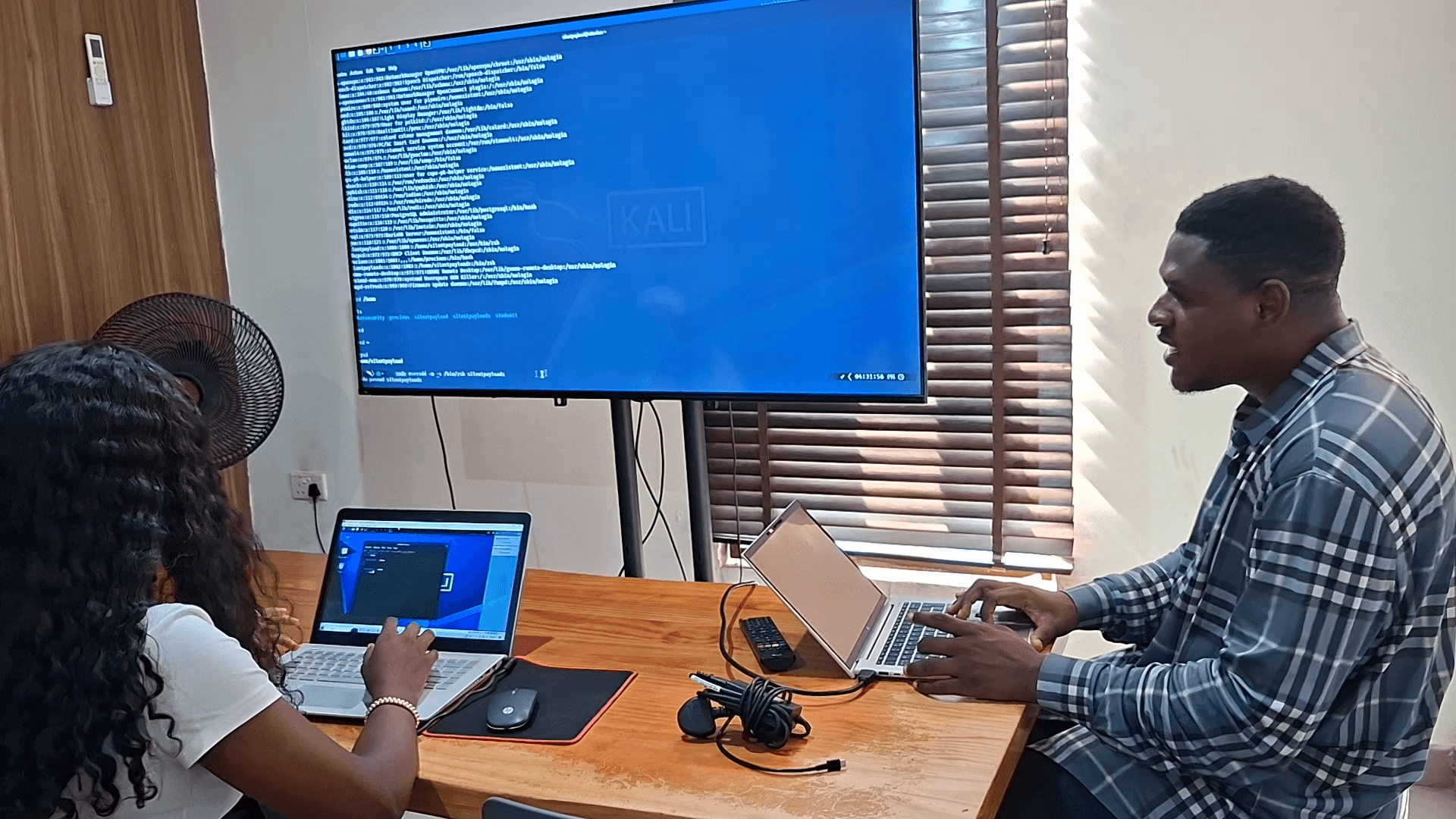
Most people are familiar with Windows or macOS. These are operating systems, the software that manages your hardware and lets you run applications. Linux is another operating system, but it is fundamentally different in one key way: it is open source. This means anyone can read its code, modify it, and build on top of it.
That single property is why cybersecurity professionals love Linux. Because you can see exactly how it works, you can control it at a level that Windows simply does not allow. You can automate tasks with scripts, monitor every process on the system, inspect network packets in real time, and customize your environment down to the last detail. Security professionals need that level of control. Attackers exploit systems at a low level, and defenders need tools that operate at the same depth.
Beyond control, Linux is free. Most professional cybersecurity distributions, Kali Linux, Parrot OS, Ubuntu Server, cost nothing to download and use. This makes it accessible to anyone learning the field regardless of budget, which matters enormously in a Nigerian context where software licensing costs can be prohibitive.
There is also a practical reality: the servers you will be tasked with defending in a real job almost certainly run Linux. Web servers, cloud infrastructure, database servers, network appliances, the majority of the internet's backbone is Linux-based. Learning it is not theoretical preparation; it is direct, applicable job training.
The Terminal: Your Most Important Tool
When most beginners hear “Linux,” they imagine having to type everything instead of clicking. That instinct is correct, but the framing is wrong. The terminal, the command-line interface where you type instructions directly to the system, is not a limitation. It is a superpower.
Think of it this way. A graphical interface (what Windows users are used to) is designed for general use. It is optimized for convenience, not precision. The terminal gives you direct access to the engine. When you need to scan 10,000 network hosts, analyze 50,000 lines of logs, or automate a repetitive security check, the terminal lets you do that in seconds. A graphical interface would take hours.
Here are five commands every beginner should learn first:
pwd: Shows you where you are in the file system (Print Working Directory)ls: Lists files and folders in your current locationcd: Changes your location (Change Directory)cat: Reads and displays the contents of a fileman: Opens the manual for any command so you can learn what it does
At Early Code Institute, students begin working with the terminal from their very first Linux session. The goal is not to memorize commands, it is to become comfortable navigating a system that initially feels unfamiliar. That comfort builds over weeks, not days, and it is one of the most valuable skills you can develop early in your cybersecurity training.
The Linux File System: Why Structure Matters in Security
Linux organizes everything in a hierarchical structure that starts from a single root directory, written as /. Every file, every program, every log, every configuration, it all lives somewhere within that structure. Understanding where things live is not just organizational knowledge; it is security-critical knowledge.
Here are six directories that cybersecurity professionals care about most:
- /etc
- This is where system-wide configuration files are stored. Things like user account settings, network configuration, and service startup behavior all live here. If an attacker gains access to your system, /etc is one of the first places they look. Defenders review it regularly to spot unauthorized changes.
- /var/log
- This is where the system writes its logs. Every time someone logs in, every time a service starts or fails, every network connection that the system records, it ends up here. Log analysis is one of the core skills in cybersecurity, and /var/log is where that work happens.
- /home
- This is where user files are stored. Each user on the system has a personal folder inside /home. In a security incident, user directories are frequently examined to understand what was accessed, modified, or exfiltrated.
- /tmp
- This is a temporary storage location that any user can write to. Attackers frequently use /tmp to store malicious files during an attack because it is writable by default. Security professionals know to check here during investigations.
- /bin and /usr/bin
- This directories contain the executable programs available on the system. Knowing what programs are installed and where helps security teams identify unauthorized software, malicious binaries, or unexpected changes to system tools.
At Early Code Institute, students do not just read about these directories. They navigate them live, list their contents, examine configuration files, and read system logs, all through the terminal. Hands-on exposure to the actual file system builds the kind of muscle memory that makes real incident response work faster and more instinctively.
Linux Permissions: The First Line of Defence
One of the most important security concepts in Linux is file permissions. Every file and directory on a Linux system has an owner, a group, and a set of permissions that define who can read it, write to it, or execute it. Misconfigurations here are responsible for a significant proportion of real-world security breaches.
When you run the command ls -l in a terminal, you will see output that looks something like this:
-rwxr-xr-- 1 praise staff 4096 Jun 20 09:15 script.sh
That string of letters at the beginning is the permission set. It tells you whether the file is readable, writable, and executable, and by whom. The owner of the file has one set of permissions. Members of the file's group have another. Everyone else on the system has a third.
Why does this matter for cybersecurity? Because a misconfigured permission, say a configuration file that is readable by everyone when it should only be readable by the system administrator, can expose sensitive information like passwords, API keys, or database credentials. This type of misconfiguration is discovered in real penetration tests and security audits constantly.
Learning to read, set, and audit Linux permissions is not an advanced topic. It is a foundational one. At Early Code Institute, students practice setting permissions using the chmod command and learn to recognize dangerous configurations before they become security incidents.
Get Hands-on Technical Skills at Early Code Institute

Nyanya Learning Center
Services: Trainings, Mentorship, SIWES Placement, and Internship
Linux and Networking: Understanding Traffic on Your Own System
Cybersecurity is fundamentally about networks, protecting the flow of data between systems. Linux gives you direct, granular access to everything happening on your network interfaces, which is why it is indispensable for network security work.
Tools like Wireshark, netstat, ss, and tcpdump run on Linux and allow you to see every packet entering and leaving your system. When you are investigating a suspicious connection, identifying an infected machine on a network, or verifying that your firewall rules are working correctly, these tools are what you reach for.
At Early Code Institute, the networking module includes live Wireshark labs where students capture and analyze real traffic. Students learn the difference between encrypted and unencrypted traffic, identify protocols by examining packet headers, and observe how everyday activities, loading a website, sending an email, translate into network data. All of this runs on Linux.
One practical exercise students complete is capturing HTTP traffic and observing that login credentials sent over unencrypted connections appear as plain text in the packet capture. It is a demonstration that turns an abstract warning into something visceral and memorable. No tool outside of Linux makes that exercise as accessible to beginners.
How Linux Connects to the Rest of Your Cybersecurity Training
Linux does not exist in isolation within a cybersecurity curriculum. It is the thread that connects everything else. At Early Code Institute, the cybersecurity analyst program is structured so that Linux proficiency compounds over time:
- When students learn Python for security automation, they write and run their scripts on Linux.
- When students work with Splunk for log analysis and SIEM operations, the data pipelines and installation environments are Linux-based.
- When students use Wireshark for network traffic analysis, they run it from a Linux machine.
- When students study incident response, the forensic environments and evidence analysis workflows run on Linux.
This is not coincidental. It reflects how the industry actually works. A SOC analyst working in a Nigerian bank, a penetration tester working for a consulting firm in Lagos, or a security engineer working remotely for a company in Europe, they all work with Linux every day. The curriculum at Early Code Institute is designed to reflect that reality, not to simplify it away.
The good news for beginners is that you do not need to know everything before you start. Linux is learned by doing. Every command you type, every directory you navigate, every permission you read, it accumulates. Students who arrive at Early Code with no technical background and leave the Linux module confident in the terminal have not memorized a list of commands. They have developed a way of thinking about systems that will serve them for the rest of their careers.
What a Linux Skill Actually Looks Like on Your Career Path
If you are considering a career in cybersecurity and wondering what employers actually want, Linux appears on almost every job description in the field. SOC Analyst roles expect you to work with Linux-based SIEM tools. Penetration tester roles expect you to use Kali Linux. Cloud security roles expect you to manage Linux servers. Digital forensics roles expect you to analyze Linux file systems.
The Computer Professionals (Registration Council of Nigeria) regulates and licenses computing professions in Nigeria, asserting standards across computational machinery and technical skills frameworks.- Computer Professionals (Registration Council of Nigeria) Official Portal
Beyond the technical requirement, there is a signal value. A candidate who is comfortable in a Linux terminal demonstrates something specific to a hiring manager: this person is not afraid to go below the surface. They are willing to work at the level where security actually happens. That signal matters in a field where surface-level knowledge is common and genuine depth is rare.
In the Nigerian tech market, cybersecurity is a growing field. Banks, fintechs, telecoms, and government agencies are all building out security teams. The candidates who stand out are not the ones who can name frameworks and certifications, they are the ones who can sit down at a Linux machine and get work done. That is what Early Code Institute trains students to do.
Starting is the only requirement. You do not need a powerful laptop. You do not need prior programming experience. You do not need to understand networking before your first class. You need curiosity, a willingness to be confused for a while, and an environment where that confusion is treated as part of the process, not a sign that you do not belong. That environment is what we build at Early Code. Explore our about page or check our institutional tracking via our CPN license credentials for additional details.
Author's Bio

Abu Praise
A Cybersecirity Instructor and AnalystAs a dedicated cybersecurity instructor, I specialize in making foundational education practical and accessible. I teach a comprehensive analyst curriculum, including Linux, networking, Python, SIEM, and forensics: guiding beginners from zero to hands-on proficiency. I'm committed to continuous growth and am expanding my technical expertise into penetration testing and bug bounty research, applying real-world defense concepts to advanced offensive security.